
VMware vCenter Server Vulnerabilities Expose Systems to Remote Code Execution
VMware has recently disclosed two significant security vulnerabilities impacting its vCenter Server and Cloud Foundation products. These flaws could allow attackers to execute remote code or escalate privileges, putting organizations at serious risk if left unpatched. VMware has strongly urged customers to update their systems immediately to avoid potential exploitation.
What is VMware vCenter Server?
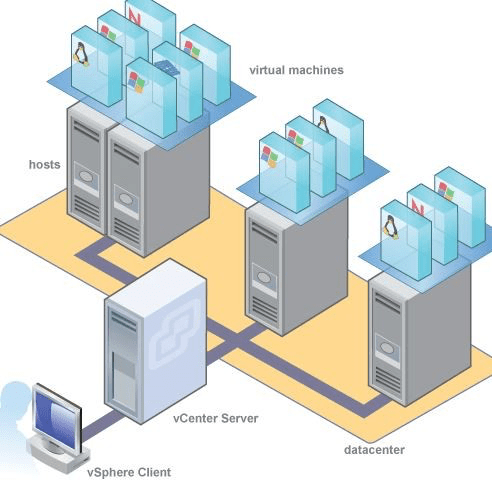
VMware vCenter Server is a centralized management platform for managing VMware vSphere environments, which includes multiple ESXi hosts and virtual machines (VMs). It allows IT administrators to control and monitor all aspects of their virtualized infrastructure from a single interface. Key features include centralized management, resource allocation, performance monitoring, automated provisioning, and support for advanced functions like vMotion (live migration of VMs) and High Availability (HA). It is essential for managing large-scale virtual environments efficiently.
The Critical Vulnerabilities: CVE-2024-38812 and CVE-2024-38813
The more severe of the two vulnerabilities, CVE-2024-38812, is a heap-overflow flaw within the DCERPC protocol implementation in vCenter Server. With a critical CVSS score of 9.8/10, this vulnerability allows attackers with network access to a vulnerable system to send specially crafted packets that could lead to remote code execution (RCE). This makes it particularly dangerous as it could allow attackers to take control of affected servers without needing authentication.
The second vulnerability, CVE-2024-38813, is a privilege escalation flaw within vCenter Server, rated with a CVSS score of 7.5. If exploited, this vulnerability could enable attackers to escalate privileges to root by sending a malicious network packet, granting them higher-level access and control over the system.
Affected Versions and Urgent Need for Patching
Both vulnerabilities impact VMware vCenter Server versions 7.0 and 8.0, as well as VMware Cloud Foundation versions 4.x and 5.x. Given the widespread use of these products in virtualized environments, unpatched systems could become a lucrative target for attackers. VMware has released patches to mitigate these vulnerabilities and urges customers to apply them as soon as possible. For vCenter Server, users should upgrade to versions 8.0 U3b or 7.0 U3s. Cloud Foundation customers should implement the async patch referenced in KB88287. With no workarounds available, patching is the only way to effectively protect against these vulnerabilities.
No Exploits in the Wild — Yet
While VMware has stated that there are currently no known active exploits targeting these vulnerabilities, the company is encouraging users to take this disclosure seriously. Given the critical nature of vCenter Server — which plays a key role in managing virtualized environments—these vulnerabilities could quickly become attractive targets for attackers.
Discovery and Reporting
The vulnerabilities were discovered by researchers participating in the 2024 Matrix Cup hacking contest in China, who responsibly reported their findings to VMware. Their contributions have been essential in helping VMware address these security risks before they could be exploited in the wild.
Mitigation: Patching Is Essential
Without any viable workarounds available, applying VMware’s patches is the only effective mitigation for these high-severity vulnerabilities. Organizations using the affected versions of vCenter Server or Cloud Foundation should prioritize updating their systems to avoid potential attacks that could leverage these flaws.
Ensuring the latest patches are applied is vital to safeguarding virtualized environments, preventing attackers from exploiting these critical vulnerabilities and gaining unauthorized access to sensitive systems. Organizations are advised to act promptly to maintain the security and integrity of their infrastructures.
 Cyberexploit
Leave a comment